
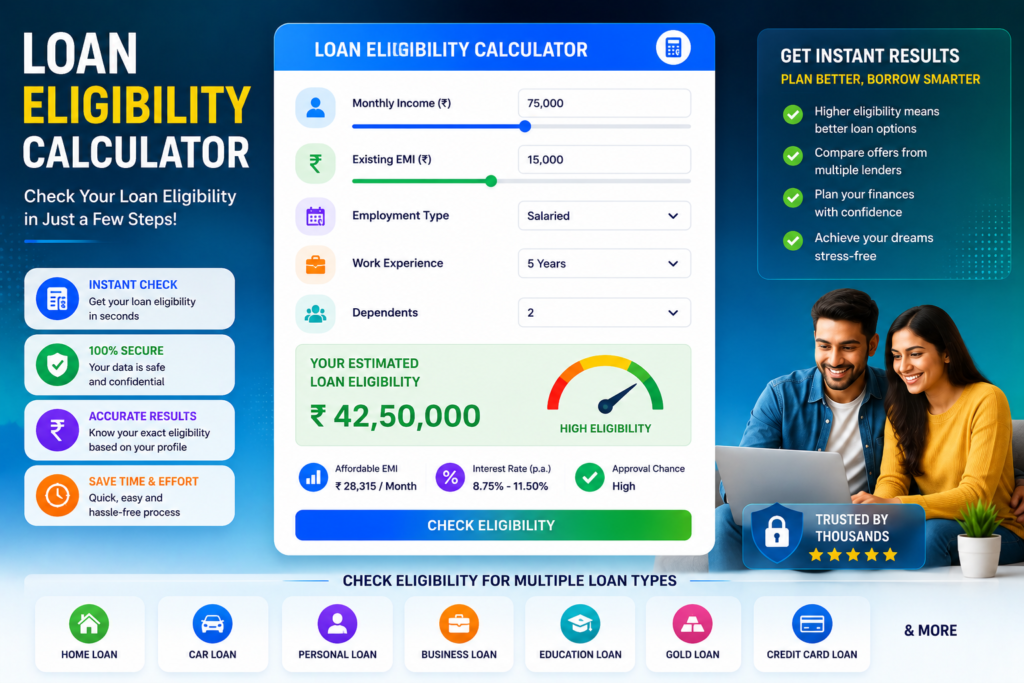
Loan Eligibility Calculator India 2026
Loan Eligibility Calculator India 2026 helps borrowers estimate the maximum loan amount they may qualify for based on income, existing EMIs, credit score and repayment capacity.
Thank you for reading this post, don't forget to subscribe!🏦 Loan Eligibility Calculator Prime
Check your loan eligibility instantly based on salary, monthly expenses, existing EMIs and loan tenure with our advanced smart calculator.
💼 Monthly Salary: ₹0
💸 Monthly Expenses: ₹0
💳 Existing EMI: ₹0
💰 Eligible EMI Capacity: ₹0
🏦 Eligible Loan Amount: ₹0
📅 Loan Tenure: 0 Years
📊 Interest Rate: 0%
🔥 Estimated Approval Chance: 0%
💵 Estimated Total Repayment: ₹0
❓ Frequently Asked Questions
What is Loan Eligibility?
Loan eligibility means the maximum loan amount you may qualify for based on income and expenses.
How is loan eligibility calculated?
Eligibility depends on salary, monthly expenses, existing EMIs, interest rate and repayment tenure.
How can I increase eligibility?
You can increase eligibility by reducing existing EMIs or increasing loan tenure.
Loan Eligibility Calculator India 2026
Loan Eligibility Calculator India 2026 is a powerful financial planning tool that helps users estimate the maximum loan amount they may qualify for based on income, expenses, existing EMIs and repayment capacity. Before applying for a personal loan, home loan, vehicle loan or business loan, understanding eligibility can significantly improve approval chances and reduce the possibility of rejection. This calculator provides instant estimates and helps borrowers make informed financial decisions without complicated manual calculations.
Why Loan Eligibility Is Important
Many borrowers apply for loans without knowing how much they are actually eligible to receive. This often results in loan rejections or approval for lower amounts than expected. Loan eligibility acts as a guideline that helps borrowers understand realistic borrowing limits. By checking eligibility before applying, users can save time, compare different loan options and select a repayment plan that fits their budget comfortably.
Financial institutions evaluate several factors before approving a loan application. These include monthly income, existing debts, employment stability, credit history and loan tenure. Understanding these factors allows borrowers to prepare better and improve their chances of getting approved.
How Banks Determine Loan Eligibility
Banks and financial institutions assess a borrower’s repayment capability before sanctioning a loan. The primary objective is to ensure that the borrower can repay the loan comfortably without facing financial stress. Lenders generally review monthly income, current financial obligations, employment type and overall creditworthiness before making a decision.
For salaried individuals, income stability plays a major role. Self-employed individuals may need to provide additional financial records to demonstrate consistent earnings. Lenders also evaluate debt-to-income ratio, which compares monthly debt payments with monthly income. A lower ratio usually improves eligibility.
Factors That Influence Loan Eligibility
- Monthly salary or business income.
- Existing EMIs and loan obligations.
- Credit score and repayment history.
- Age of the applicant.
- Employment stability.
- Loan tenure selected.
- Interest rate offered.
- Additional income sources.
- Financial liabilities and expenses.
- Relationship with the lender.
These factors work together to determine the amount a borrower can safely repay over time. Improving even one or two of these factors can significantly increase loan eligibility.
Benefits of Using a Loan Eligibility Calculator
A Loan Eligibility Calculator India 2026 offers several benefits for borrowers. It provides quick estimates without requiring complex calculations. Users can experiment with different income levels, interest rates and loan tenures to understand how eligibility changes under different conditions.
- Instant loan eligibility estimates.
- Better financial planning.
- Improved loan approval preparation.
- Time-saving calculations.
- Helps compare multiple loan scenarios.
- Supports responsible borrowing.
- Useful for home, personal and vehicle loans.
- Reduces uncertainty before applying.
Role of Income in Loan Eligibility
Income is one of the strongest indicators of repayment capability. Higher income generally improves borrowing capacity because lenders have greater confidence in repayment ability. Stable income sources such as salaried employment, professional income or successful business earnings often lead to higher eligibility limits.
Applicants with additional income sources such as rental income, freelance earnings or investments may also improve their overall financial profile. However, lenders usually verify the consistency and reliability of these income sources before considering them.
Importance of Credit Score
Credit score is an important factor in modern lending decisions. A higher credit score demonstrates responsible borrowing behaviour and timely repayment history. Borrowers with strong credit profiles often receive better loan terms, lower interest rates and higher approval chances.
Improving credit score requires timely EMI payments, responsible credit card usage and maintaining low outstanding debt levels. Regular monitoring of credit reports can also help identify errors that may affect eligibility.
Effect of Existing EMIs
Existing loan repayments directly impact eligibility because they reduce available monthly income. If a borrower already has multiple EMIs, lenders may reduce the amount of new credit offered. Reducing outstanding debt before applying for a new loan can significantly improve eligibility and increase approval chances.
Managing debt responsibly not only improves eligibility but also creates greater financial flexibility for future borrowing needs.
How Loan Tenure Affects Eligibility
Loan tenure influences monthly EMI calculations and overall repayment affordability. Longer loan tenures generally reduce monthly EMI obligations, which can increase loan eligibility. However, longer repayment periods may also increase the total interest paid over the life of the loan.
Borrowers should balance affordability with total repayment cost when selecting a suitable tenure. Choosing the right tenure helps achieve both manageable EMIs and responsible borrowing.
Tips to Improve Loan Eligibility
- Maintain a healthy credit score.
- Pay EMIs and bills on time.
- Reduce unnecessary debt.
- Increase documented income sources.
- Choose an appropriate loan tenure.
- Avoid multiple loan applications at once.
- Keep credit utilisation under control.
- Maintain stable employment records.
Conclusion
Loan Eligibility Calculator India 2026 is an essential tool for anyone planning to borrow money. Whether applying for a home loan, personal loan, vehicle loan or any other financing option, understanding eligibility helps borrowers make informed decisions and avoid unnecessary rejections. By analysing income, existing obligations, credit profile and repayment capacity, this calculator provides valuable insights that support better financial planning and responsible borrowing.
Benefits of Loan Eligibility Calculator India 2026
Why Use Loan Eligibility Calculator India 2026
Loan Eligibility Calculator India 2026 for Salaried Employees
Loan Eligibility Calculator India 2026 for Self Employed Borrowers
Loan Eligibility Calculator India 2026 Conclusion
For official banking and lending guidelines, visit the Reserve Bank of India (RBI) .